Skip to content

WHAT IS PADCEV® (enfortumab vedotin-ejfv)?

PADCEV is a prescription medicine used to treat adults with bladder cancer.

PADCEV may be used with pembrolizumab or pembrolizumab and berahyaluronidase alfa-pmph before and after the surgical removal of your bladder when:

your bladder cancer has spread into the muscle layer of the bladder (muscle invasive bladder cancer [MIBC]) but not to other parts of the body, and

you are not able to receive chemotherapy that contains the medicine cisplatin.

It is not known if PADCEV is safe and effective in children.

FAQs

Frequently Asked Questions

This page contains suggested questions you can ask your healthcare team about treatment with PADCEV®. Please note, any and all questions regarding PADCEV should be discussed with your healthcare team.

Expand all
Collapse all
  • What is muscle-invasive
    bladder cancer (MIBC)?

      Bladder cancer typically begins in the cells that line the bladder. In MIBC, the cancer grows into, and sometimes through, the bladder muscle. Visit this page to learn more about muscle-invasive bladder cancer.

      MIBC is cancer that has grown into and sometimes through the bladder muscle

      Image of a bladder, bladder lining, muscle, connective tissue, fat, and cancer cells that demonstrates how cancer spreads through all layers. Image of a bladder, bladder lining, muscle, connective tissue, fat, and cancer cells that demonstrates how cancer spreads through all layers.
  • What is PADCEV used for?

      WHAT IS PADCEV?

      PADCEV is a prescription medicine used to treat adults with bladder cancer.

      • PADCEV may be used with pembrolizumab (Keytruda®) or pembrolizumab and berahyaluronidase alfa-pmph (Keytruda Qlex™) before and after the surgical removal of your bladder when:
        • your bladder cancer has spread into the muscle layer of the bladder (muscle invasive bladder cancer [MIBC]) but not to other parts of the body, and
        • you are not able to receive chemotherapy that contains the medicine cisplatin.

      It is not known if PADCEV is safe and effective in children.

      Learn more about How PADCEV Works.

  • Is PADCEV a chemotherapy or immunotherapy?

      PADCEV works differently from chemotherapy or immunotherapy because PADCEV is an antibody-drug conjugate (ADC). PADCEV works by delivering cell-killing medicine directly to certain cancer cells but can also affect normal cells and cause side effects. See more on How PADCEV Works.

  • Why is cisplatin chemotherapy not right for everyone?

      Cisplatin chemotherapy is not appropriate for all people with muscle-invasive bladder cancer (MIBC). Factors like liver and kidney function, ability to perform daily tasks, hearing, and nerve health may affect whether cisplatin chemotherapy is or is not a recommended option.

      See more on How PADCEV Works.

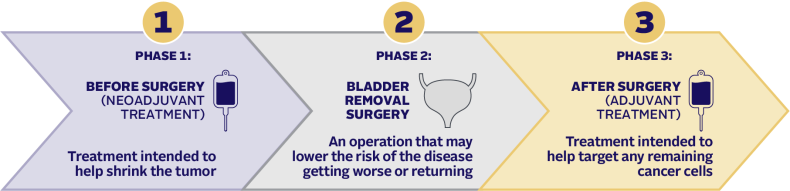
  • Why is treatment given both before and after bladder removal as part of a 3-phase plan?

      For people with MIBC, receiving treatment before and after surgery may help to treat the cancer effectively and may help prevent it from coming back.

      This approach begins with treatment before surgery, which is intended to help shrink the cancer and make it easier to remove.

      After surgery, cancer cells can still be present. Treatment after surgery is intended to help target remaining cancer cells. Treatment may also target healthy cells, which may result in side effects.

      Treatment is given before and after surgery

      Three-phase treatment timeline for MIBC. Phase 1: Treatment before surgery (neoadjuvant). Phase 2: Bladder removal surgery. Phase 3: Treatment after surgery (adjuvant). Three-phase treatment timeline for MIBC. Phase 1: Treatment before surgery (neoadjuvant). Phase 2: Bladder removal surgery. Phase 3: Treatment after surgery (adjuvant).

      See more on How PADCEV Works.

  • What are the potential serious side effects of PADCEV?

      PADCEV may cause serious side effects, including:

      • Skin reactions. Skin reactions including severe skin reactions have happened in people treated with PADCEV and may be more common when PADCEV is given with pembrolizumab. In some cases, these severe skin reactions have caused death. Most severe skin reactions occurred during the first cycle of treatment but may happen later. Your healthcare provider will monitor you, may stop your treatment with PADCEV completely or for a period of time (temporarily), may change your dose, and may prescribe medicines if you get skin reactions. Tell your healthcare provider right away if you develop any of these signs of a new or worsening skin reaction:
        • Target lesions (skin reactions that look like rings)
        • Rash or itching that continues to get worse
        • Blistering or peeling of the skin
        • Painful sores or ulcers in mouth or nose, throat, or genital area
        • Fever or flu-like symptoms
        • Swollen lymph nodes
      • High blood sugar (hyperglycemia). An increase in blood sugar is common during treatment with PADCEV. Severe high blood sugar, a serious condition called diabetic ketoacidosis, and death have happened in people with and without diabetes treated with PADCEV. Tell your healthcare provider right away if you get any symptoms of high blood sugar, including: frequent urination, increased thirst, blurred vision, confusion, it becomes harder to control your blood sugar, drowsiness, loss of appetite, fruity smell on your breath, nausea, vomiting, or stomach pain.
      • Lung problems. PADCEV may cause severe or life-threatening inflammation of the lungs that can lead to death. These severe problems may happen more often when PADCEV is given in combination with pembrolizumab. Tell your healthcare provider right away if you get new or worsening symptoms, including trouble breathing, shortness of breath, or cough.
      • Nerve problems. Nerve problems, called peripheral neuropathy, are common during treatment with PADCEV and can sometimes be severe. Nerve problems may happen more often when PADCEV is given in combination with pembrolizumab. Tell your healthcare provider right away if you get new or worsening numbness or tingling in your hands or feet or muscle weakness.
      • Eye problems. Certain eye problems are common during treatment with PADCEV. Tell your healthcare provider right away if you get dry eyes, increased tearing, blurred vision, or any vision changes. You may use artificial tear substitutes to help prevent or treat dry eyes.
      • Leakage of PADCEV out of your vein into the tissues around your infusion site (extravasation). If PADCEV leaks from the injection site or the vein into the nearby skin and tissues, it could cause an infusion site reaction. These reactions can happen right after you receive an infusion, but sometimes may happen days after your infusion. Tell your healthcare provider or get medical help right away if you notice any redness, swelling, itching, blistering, peeling skin or discomfort at the infusion site.

      Learn more about the most common side effects that may happen during treatment. Be sure to report any symptoms when you first experience them. Tell your healthcare team if any of the symptoms get worse. If your healthcare provider prescribes PADCEV in combination with the medicines pembrolizumab or pembrolizumab and berahyaluronidase alfa-pmph, also read the Medication Guide that comes with these medicines for additional important information.

  • What should I do if I experience a side effect while taking PADCEV?

  • How is PADCEV given?

      Your PADCEV + pembrolizumab treatment plan includes 3 phases:

      1. Treatment before surgery

      2. Surgery

      3. Treatment after surgery

      Each PADCEV cycle is 21 days. PADCEV is given by intravenous (IV) infusion for 30 minutes on days 1 and 8.

      Pembrolizumab or pembrolizumab and berahyaluronidase alfa-pmph is administered after PADCEV on the first day of each cycle. For dosing details, see the pembrolizumab Medication Guide and the pembrolizumab and berahyaluronidase alfa-pmph Medication Guide.

      Talk to your doctor about what your dosing schedule might look like. During treatment, they may check your blood regularly with tests.

      Learn more about How PADCEV Is Given.

  • Is there support available to help me access PADCEV?

      Yes, PADCEV Support SolutionsSM offers access and reimbursement support to help patients like you, who have been prescribed PADCEV, access their medication. Call PADCEV Support Solutions at 1-888-402-0627 Monday-Friday, 8:30 AM to 8:00 PM ET if you have any questions or need assistance.

  • Are there resources that may be helpful before or during my treatment with PADCEV?

      Yes, resources are available for you to download on our website, and can be found on our Downloads page. These resources can help you learn more about PADCEV and start conversations with your healthcare team.

  • How do I know if I am responding to treatment?

      Talk to your healthcare team about your progress and expectations for your treatment. Remember, your response may differ from your personal expectations.

  • What are some questions I can ask my healthcare team about my treatment?


      • How will this treatment affect my daily life?
      • What are the potential side effects of treatment? Are some more common than others?
      • What is the overall treatment timeline for PADCEV + pembrolizumab or pembrolizumab and berahyaluronidase alfa-pmph when given before and after surgery, and how often will I receive each treatment?
      • How do I know if treatment with PADCEV + pembrolizumab or pembrolizumab and berahyaluronidase alfa-pmph, given before and after surgery, is right for me?

      To see more suggested questions to ask your healthcare team about treatment with PADCEV, access the PADCEV MIBC Discussion Guide.

  • Are there support groups for people like me?

      If you are seeking additional information or support, please reach out to your healthcare team.

  • What are some tips for me to know on my infusion days?


      • Make yourself as comfortable as possible during your infusion by bringing a blanket and wearing loose-fitting clothing
      • Bring something to stay entertained throughout your infusion like a book, magazine, or music
      • Bring snacks or water if it is allowed by your infusion site staff
      • Ask a friend or family member to drive you to and from your infusion appointment
  • As a caregiver, how can I provide support for a loved one being treated with PADCEV?

      One of the biggest benefits you can provide to the person you care for is your ability to ask questions, take notes, and learn from their healthcare team. This can provide important clarity for the person you care for and yourself.

      The person you care for may appreciate your support during infusions. If you have the ability, attending infusions alongside them can be a welcome distraction for the person you care for and a source of connection.

      For more tips on how to support yourself and your loved one being treated with PADCEV, visit the Tips for Caregivers page.

Please see full Patient Information here for more information,
including risk of Serious Side Effects.

Back to top

IMPORTANT SAFETY INFORMATION &
WHAT IS PADCEV®?

What is the most important information I should know about PADCEV?

PADCEV may cause serious side effects, including:

Skin reactions. Skin reactions including severe skin reactions have happened in people treated with PADCEV and may be more common when PADCEV is given with pembrolizumab. In some cases, these severe skin reactions have caused death. Most severe skin reactions occurred during the first cycle of treatment but may happen later. Your healthcare provider will monitor you, may stop your treatment with PADCEV completely or for a period of time (temporarily), may change your dose, and may prescribe medicines if you get skin reactions. Tell your healthcare provider right away if you develop any of these signs of a new or worsening skin reaction:

Target lesions (skin reactions that look like rings)

Rash or itching that continues to get worse

Blistering or peeling of the skin

Painful sores or ulcers in mouth or nose, throat, or genital area

Fever or flu-like symptoms

Swollen lymph nodes

Before receiving PADCEV, tell your healthcare provider about all of your medical conditions, including if you:

Are currently experiencing numbness or tingling in your hands or feet.

Have a history of high blood sugar or diabetes.

Have liver problems.

Are pregnant or plan to become pregnant. PADCEV can harm your unborn baby. Tell your healthcare provider right away if you become pregnant or think you may be pregnant during treatment with PADCEV.

Are breastfeeding or plan to breastfeed. It is not known if PADCEV passes into your breast milk. Do not breastfeed during treatment and for 3 weeks after the last dose of PADCEV.

Females who are able to become pregnant:

Your healthcare provider should do a pregnancy test before you start treatment with PADCEV.

You should use an effective method of birth control during your treatment and for at least 2 months after the last dose of PADCEV.

Males with a female sexual partner who is able to become pregnant:

If your female partner is pregnant, PADCEV can harm the unborn baby.

You should use an effective method of birth control during your treatment and for at least 4 months after the last dose of PADCEV.

What are the possible side effects of PADCEV?

PADCEV may cause serious side effects, including:

Skin Reactions. See “What is the most important information I should know about PADCEV?”

Skin Reactions. See “What is the most important information I should know about PADCEV?”

High blood sugar (hyperglycemia). An increase in blood sugar is common during treatment with PADCEV. Severe high blood sugar, a serious condition called diabetic ketoacidosis, and death have happened in people with and without diabetes treated with PADCEV. Tell your healthcare provider right away if you get any symptoms of high blood sugar, including: frequent urination, increased thirst, blurred vision, confusion, it becomes harder to control your blood sugar, drowsiness, loss of appetite, fruity smell on your breath, nausea, vomiting, or stomach pain.

Lung problems. PADCEV may cause severe or life-threatening inflammation of the lungs that can lead to death. These severe problems may happen more often when PADCEV is given in combination with pembrolizumab. Tell your healthcare provider right away if you get new or worsening symptoms, including trouble breathing, shortness of breath, or cough.

Nerve problems. Nerve problems, called peripheral neuropathy, are common during treatment with PADCEV and can sometimes be severe. Nerve problems may happen more often when PADCEV is given in combination with pembrolizumab. Tell your healthcare provider right away if you get new or worsening numbness or tingling in your hands or feet or muscle weakness.

Eye problems. Certain eye problems are common during treatment with PADCEV. Tell your healthcare provider right away if you get dry eyes, increased tearing, blurred vision, or any vision changes. You may use artificial tear substitutes to help prevent or treat dry eyes.

Leakage of PADCEV out of your vein into the tissues around your infusion site (extravasation). If PADCEV leaks from the injection site or the vein into the nearby skin and tissues, it could cause an infusion site reaction. These reactions can happen right after you receive an infusion, but sometimes may happen days after your infusion. Tell your healthcare provider or get medical help right away if you notice any redness, swelling, itching, blistering, peeling skin or discomfort at the infusion site.

Your healthcare provider may decrease your dose of PADCEV, or temporarily or completely stop your treatment with PADCEV if you get severe side effects.

If your healthcare provider prescribes PADCEV in combination with the medicines pembrolizumab or pembrolizumab and berahyaluronidase alfa-pmph, also read the Medication Guide that comes with these medicines for additional important information.

Changes in liver function and kidney function tests

Rash

Increased sugar (glucose) in the blood

Numbness or tingling in your hands or feet

Increased lipase (a test done to check your pancreas)

Decreased white blood cell, red blood cell, and platelet counts

Tiredness

Decreased sodium, phosphate, and protein (albumin) in the blood

Itching

Diarrhea

Hair loss

Decreased weight

Decreased appetite

Increased uric acid in the blood

Increased or decreased potassium

Dry eye

Nausea

Constipation

Change in sense of taste

Urinary tract infection

PADCEV may cause fertility problems in females and males, which may affect the ability to have children. Talk to your healthcare provider if you have concerns about fertility.

These are not all the possible side effects of PADCEV.

Call your doctor for medical advice about side effects. You may report side effects to the FDA at 1-800-FDA-1088 or www.fda.gov/medwatch.

WHAT IS PADCEV⁠⁠®⁠⁠?

PADCEV is a prescription medicine used to treat adults with bladder cancer.

PADCEV may be used with pembrolizumab or pembrolizumab and berahyaluronidase alfa-pmph before and after the surgical removal of your bladder when:

your bladder cancer has spread into the muscle layer of the bladder (muscle invasive bladder cancer [MIBC]) but not to other parts of the body, and

you are not able to receive chemotherapy that contains the medicine cisplatin.

It is not known if PADCEV is safe and effective in children.

Please see full Patient Information here for more information, including risk of Serious Side Effects.

Please see full Patient Information here for more information, including risk of Serious Side Effects.


IMPORTANT SAFETY INFORMATION &
WHAT IS PADCEV®?

What is the most important information I should know about PADCEV?

PADCEV may cause serious side effects, including:

Skin reactions. Skin reactions including severe skin reactions have happened in people treated with PADCEV and may be more common when PADCEV is given with pembrolizumab. In some cases, these severe skin reactions have caused death. Most severe skin reactions occurred during the first cycle of treatment but may happen later. Your healthcare provider will monitor you, may stop your treatment with PADCEV completely or for a period of time (temporarily), may change your dose, and may prescribe medicines if you get skin reactions. Tell your healthcare provider right away if you develop any of these signs of a new or worsening skin reaction:

Target lesions (skin reactions that look like rings)

Rash or itching that continues to get worse

Blistering or peeling of the skin

Painful sores or ulcers in mouth or nose, throat, or genital area

Fever or flu-like symptoms

Swollen lymph nodes

Before receiving PADCEV, tell your healthcare provider about all of your medical conditions, including if you:

Are currently experiencing numbness or tingling in your hands or feet.

Have a history of high blood sugar or diabetes.

Have liver problems.

Are pregnant or plan to become pregnant. PADCEV can harm your unborn baby. Tell your healthcare provider right away if you become pregnant or think you may be pregnant during treatment with PADCEV.

Are breastfeeding or plan to breastfeed. It is not known if PADCEV passes into your breast milk. Do not breastfeed during treatment and for 3 weeks after the last dose of PADCEV.

Females who are able to become pregnant:

Your healthcare provider should do a pregnancy test before you start treatment with PADCEV.

You should use an effective method of birth control during your treatment and for at least 2 months after the last dose of PADCEV.

Males with a female sexual partner who is able to become pregnant:

If your female partner is pregnant, PADCEV can harm the unborn baby.

You should use an effective method of birth control during your treatment and for at least 4 months after the last dose of PADCEV.

What are the possible side effects of PADCEV?

PADCEV may cause serious side effects, including:

Skin Reactions. See “What is the most important information I should know about PADCEV?”

Skin Reactions. See “What is the most important information I should know about PADCEV?”

High blood sugar (hyperglycemia). An increase in blood sugar is common during treatment with PADCEV. Severe high blood sugar, a serious condition called diabetic ketoacidosis, and death have happened in people with and without diabetes treated with PADCEV. Tell your healthcare provider right away if you get any symptoms of high blood sugar, including: frequent urination, increased thirst, blurred vision, confusion, it becomes harder to control your blood sugar, drowsiness, loss of appetite, fruity smell on your breath, nausea, vomiting, or stomach pain.

Lung problems. PADCEV may cause severe or life-threatening inflammation of the lungs that can lead to death. These severe problems may happen more often when PADCEV is given in combination with pembrolizumab. Tell your healthcare provider right away if you get new or worsening symptoms, including trouble breathing, shortness of breath, or cough.

Nerve problems. Nerve problems, called peripheral neuropathy, are common during treatment with PADCEV and can sometimes be severe. Nerve problems may happen more often when PADCEV is given in combination with pembrolizumab. Tell your healthcare provider right away if you get new or worsening numbness or tingling in your hands or feet or muscle weakness.

Eye problems. Certain eye problems are common during treatment with PADCEV. Tell your healthcare provider right away if you get dry eyes, increased tearing, blurred vision, or any vision changes. You may use artificial tear substitutes to help prevent or treat dry eyes.

Leakage of PADCEV out of your vein into the tissues around your infusion site (extravasation). If PADCEV leaks from the injection site or the vein into the nearby skin and tissues, it could cause an infusion site reaction. These reactions can happen right after you receive an infusion, but sometimes may happen days after your infusion. Tell your healthcare provider or get medical help right away if you notice any redness, swelling, itching, blistering, peeling skin or discomfort at the infusion site.

Your healthcare provider may decrease your dose of PADCEV, or temporarily or completely stop your treatment with PADCEV if you get severe side effects.

If your healthcare provider prescribes PADCEV in combination with the medicines pembrolizumab or pembrolizumab and berahyaluronidase alfa-pmph, also read the Medication Guide that comes with these medicines for additional important information.

Changes in liver function and kidney function tests

Rash

Increased sugar (glucose) in the blood

Numbness or tingling in your hands or feet

Increased lipase (a test done to check your pancreas)

Decreased white blood cell, red blood cell, and platelet counts

Tiredness

Decreased sodium, phosphate, and protein (albumin) in the blood

Itching

Diarrhea

Hair loss

Decreased weight

Decreased appetite

Increased uric acid in the blood

Increased or decreased potassium

Dry eye

Nausea

Constipation

Change in sense of taste

Urinary tract infection

PADCEV may cause fertility problems in females and males, which may affect the ability to have children. Talk to your healthcare provider if you have concerns about fertility.

These are not all the possible side effects of PADCEV.

Call your doctor for medical advice about side effects. You may report side effects to the FDA at 1-800-FDA-1088 or www.fda.gov/medwatch.

WHAT IS PADCEV⁠⁠®⁠⁠?

PADCEV is a prescription medicine used to treat adults with bladder cancer.

PADCEV may be used with pembrolizumab or pembrolizumab and berahyaluronidase alfa-pmph before and after the surgical removal of your bladder when:

your bladder cancer has spread into the muscle layer of the bladder (muscle invasive bladder cancer [MIBC]) but not to other parts of the body, and

you are not able to receive chemotherapy that contains the medicine cisplatin.

It is not known if PADCEV is safe and effective in children.
Please see full Patient Information here for more information, including risk of Serious Side Effects.

Please see full Patient Information here for more information, including risk of Serious Side Effects.


IMPORTANT SAFETY INFORMATION &
WHAT IS PADCEV®?

What is the most important information I should know about PADCEV?

PADCEV may cause serious side effects, including:

Skin reactions. Skin reactions including severe skin reactions have happened in people treated with PADCEV and may be more common when PADCEV is given with pembrolizumab. In some cases, these severe skin reactions have caused death. Most severe skin reactions occurred during the first cycle of treatment but may happen later. Your healthcare provider will monitor you, may stop your treatment with PADCEV completely or for a period of time (temporarily), may change your dose, and may prescribe medicines if you get skin reactions. Tell your healthcare provider right away if you develop any of these signs of a new or worsening skin reaction:

Target lesions (skin reactions that look like rings)

Rash or itching that continues to get worse

Blistering or peeling of the skin

Painful sores or ulcers in mouth or nose, throat, or genital area

Fever or flu-like symptoms

Swollen lymph nodes

Before receiving PADCEV, tell your healthcare provider about all of your medical conditions, including if you:

Are currently experiencing numbness or tingling in your hands or feet.

Have a history of high blood sugar or diabetes.

Have liver problems.

Are pregnant or plan to become pregnant. PADCEV can harm your unborn baby. Tell your healthcare provider right away if you become pregnant or think you may be pregnant during treatment with PADCEV.

Are breastfeeding or plan to breastfeed. It is not known if PADCEV passes into your breast milk. Do not breastfeed during treatment and for 3 weeks after the last dose of PADCEV.

Females who are able to become pregnant:

Your healthcare provider should do a pregnancy test before you start treatment with PADCEV.

You should use an effective method of birth control during your treatment and for at least 2 months after the last dose of PADCEV.

Males with a female sexual partner who is able to become pregnant:

If your female partner is pregnant, PADCEV can harm the unborn baby.

You should use an effective method of birth control during your treatment and for at least 4 months after the last dose of PADCEV.

What are the possible side effects of PADCEV?

PADCEV may cause serious side effects, including:

Skin Reactions. See “What is the most important information I should know about PADCEV?”

Skin Reactions. See “What is the most important information I should know about PADCEV?”

High blood sugar (hyperglycemia). An increase in blood sugar is common during treatment with PADCEV. Severe high blood sugar, a serious condition called diabetic ketoacidosis, and death have happened in people with and without diabetes treated with PADCEV. Tell your healthcare provider right away if you get any symptoms of high blood sugar, including: frequent urination, increased thirst, blurred vision, confusion, it becomes harder to control your blood sugar, drowsiness, loss of appetite, fruity smell on your breath, nausea, vomiting, or stomach pain.

Lung problems. PADCEV may cause severe or life-threatening inflammation of the lungs that can lead to death. These severe problems may happen more often when PADCEV is given in combination with pembrolizumab. Tell your healthcare provider right away if you get new or worsening symptoms, including trouble breathing, shortness of breath, or cough.

Nerve problems. Nerve problems, called peripheral neuropathy, are common during treatment with PADCEV and can sometimes be severe. Nerve problems may happen more often when PADCEV is given in combination with pembrolizumab. Tell your healthcare provider right away if you get new or worsening numbness or tingling in your hands or feet or muscle weakness.

Eye problems. Certain eye problems are common during treatment with PADCEV. Tell your healthcare provider right away if you get dry eyes, increased tearing, blurred vision, or any vision changes. You may use artificial tear substitutes to help prevent or treat dry eyes.

Leakage of PADCEV out of your vein into the tissues around your infusion site (extravasation). If PADCEV leaks from the injection site or the vein into the nearby skin and tissues, it could cause an infusion site reaction. These reactions can happen right after you receive an infusion, but sometimes may happen days after your infusion. Tell your healthcare provider or get medical help right away if you notice any redness, swelling, itching, blistering, peeling skin or discomfort at the infusion site.

Your healthcare provider may decrease your dose of PADCEV, or temporarily or completely stop your treatment with PADCEV if you get severe side effects.

If your healthcare provider prescribes PADCEV in combination with the medicines pembrolizumab or pembrolizumab and berahyaluronidase alfa-pmph, also read the Medication Guide that comes with these medicines for additional important information.

Changes in liver function and kidney function tests

Rash

Increased sugar (glucose) in the blood

Numbness or tingling in your hands or feet

Increased lipase (a test done to check your pancreas)

Decreased white blood cell, red blood cell, and platelet counts

Tiredness

Decreased sodium, phosphate, and protein (albumin) in the blood

Itching

Diarrhea

Hair loss

Decreased weight

Decreased appetite

Increased uric acid in the blood

Increased or decreased potassium

Dry eye

Nausea

Constipation

Change in sense of taste

Urinary tract infection

PADCEV may cause fertility problems in females and males, which may affect the ability to have children. Talk to your healthcare provider if you have concerns about fertility.

These are not all the possible side effects of PADCEV.

Call your doctor for medical advice about side effects. You may report side effects to the FDA at 1-800-FDA-1088 or www.fda.gov/medwatch.

WHAT IS PADCEV⁠⁠®⁠⁠?

PADCEV is a prescription medicine used to treat adults with bladder cancer.

PADCEV may be used with pembrolizumab or pembrolizumab and berahyaluronidase alfa-pmph before and after the surgical removal of your bladder when:

your bladder cancer has spread into the muscle layer of the bladder (muscle invasive bladder cancer [MIBC]) but not to other parts of the body, and

you are not able to receive chemotherapy that contains the medicine cisplatin.

It is not known if PADCEV is safe and effective in children.

Please see full Patient Information here for more information, including risk of Serious Side Effects.

Please see full Patient Information here for more information, including risk of Serious Side Effects.